
Primary Bathroom Remodel: Where to Spend and Where to Save

Your primary bathroom is the first room you use in the morning and the last one you use at night. It is also a room where one wrong decision can get expensive fast.
Many homes in Highlands Ranch and the south Denver suburbs still have their original primary bath. That often means a large garden tub nobody uses, a small shower, a builder-grade vanity, and one light in the ceiling. It works. It just does not feel like a retreat.
Most homeowners start a remodel with the same question: where should the money go? The answer is not "spend on everything" or "save on everything." It is knowing which choices protect your home and your daily comfort, and which ones can stay simple.
This guide walks through where we recommend spending, where we recommend saving, and a few ideas to get you started.
In this guide:
The Simple Rule: Behind the Wall, In Your Hand, On the Wall
When we talk through a budget with a homeowner, we sort every decision into three groups.
Behind the wall.
Waterproofing, plumbing, framing, electrical, and ventilation. You never see these once the room is finished. They are also the hardest and most expensive things to fix later. This is where we spend first.
In your hand.
The things you touch every day: the shower valve, the faucet, the drawers, the door hardware. Quality shows up here every single morning. This is where we spend second.
On the wall.
Tile patterns, paint colors, mirrors, light fixtures, and decor. These shape the look of the room, but they are easier to update later and come in a huge range of prices. This is where we save the most.
If you remember only one thing from this post, make it that order. A bathroom with solid construction and a simple, good-looking finish will outlast a bathroom with expensive tile over weak construction.

Where to Spend
1. Waterproofing and Shower Construction
Water damage behind tile is one of the most costly problems a bathroom can have. You cannot see it, and by the time you notice it, the damage is often already large.
A well-built shower starts with the right slope, a sealed waterproofing system, and a correctly built shower pan. The tile is the finish. The waterproofing is the protection.
When you compare estimates, ask how the shower will be waterproofed. A clear answer is a good sign. A vague answer is worth a follow-up question.
2. Layout Changes That Fix Daily Frustrations
Moving a toilet or a shower costs more than leaving it where it is. But sometimes the layout is the real problem.
Ask yourself a few questions:
Do two people bump into each other in the morning?
Is the shower too small or awkward to step into?
Is there a tub you have not used in years taking up your best square footage?
Is there nowhere to put towels, hair tools, or cleaning supplies?
If the answer to any of these is yes, a layout change can be the best money you spend. A bathroom that fits how you live feels better every day than a bathroom with fancier tile in the same frustrating layout.
If removing a tub is on your list, our guide to tub to shower conversion in Highlands Ranch explains what to expect.
3. The Shower Valve and Plumbing You Cannot Easily Swap
The trim you see on the wall is easy to change later. The valve behind it is not. A reliable valve from an established brand gives you steady water temperature and parts that are easy to find years from now.
Water across much of the Denver metro tends to be on the harder side. Fixtures with replaceable parts and a solid service history are easier to maintain. This is one of those "behind the wall" choices that pays off quietly for years.
4. Ventilation and Lighting
These two are often trimmed from budgets, and they are two of the most important parts of the room.
A properly sized, quiet exhaust fan moves moisture out of the bathroom. That protects your paint, drywall, and grout. A fan that is too weak or too loud often gets turned off, which defeats the purpose.
For lighting, think in layers. Use bright, even light at the vanity so you are not casting shadows on your face. Add overhead light for general use. Add a dimmable or warm option for evenings. Good lighting makes simple finishes look better. Poor lighting makes expensive finishes look flat.
5. Tile Installation, Not Just Tile
A simple porcelain tile installed well looks better than a premium tile installed poorly. Flat surfaces, straight lines, consistent grout joints, and clean edges are what make a bathroom look high end.
This is why the person installing the tile matters as much as the tile itself. When you review a project, look at how the lines meet at corners, niches, and edges. That detail tells you a lot.

6. Storage That Fits Your Routine
Storage is easy to overlook until you live without it. A tall linen cabinet, deep drawers in the vanity, and a recessed shower niche solve problems many people have lived with for years. These are small line items that make a big difference every day.
Where to Save
1. Keep Plumbing in Place When the Layout Works
If your current layout works for you, leaving the toilet, shower, and vanity in their current spots can reduce labor and keep the project simpler. You can still change everything you see. The room can feel brand new without moving a single pipe.
2. Choose Tile With Purpose
Tile is one of the best places to control cost. A few ways to do it:
Use a durable porcelain tile that gives you the look of stone or wood without natural stone pricing or upkeep.
Save the special tile for one feature wall or niche, and use a simpler tile everywhere else.
Consider large format tile. It means fewer grout lines and a cleaner look, though it needs a flat surface to install well.
Natural stone can be beautiful, but it needs sealing and ongoing care. Porcelain is a practical choice for many homeowners.

3. Go Stock or Semi-Custom on the Vanity
A fully custom vanity can be wonderful, but it is not required for a great primary bath. Stock and semi-custom vanities come in many sizes, colors, and finishes. Pair one with a good countertop and quality hardware, and most guests will never know the difference. Put the savings toward the shower instead.
4. Choose Finishes You Can Update Later
Mirrors, cabinet pulls, towel bars, light fixtures, and paint are all easy to swap in the future. Pick something you like that fits your budget. If your taste changes in five years, you can update these without touching the construction.
5. Skip the Extras You Will Not Use
It is easy to add features because they look good in photos. Before you add something, ask if you would use it every week. A steam shower, a built-in speaker, or an oversized soaking tub is great for some people and wasted money for others. Be realistic about your routine.
Where It Depends on You
Some upgrades are worth it for one household and not for another. These are the ones we talk through most often.
Heated floors. Colorado winters make tile cold. If you walk barefoot in the morning, many people find heated floors one of their favorite upgrades. If you always wear slippers, you may skip it.
A freestanding tub. If you take baths regularly, it can be the centerpiece of the room. If you have not used your current tub in years, a larger, better shower may serve you better.
Frameless glass. It gives a clean, open look and can make a small bathroom feel larger. It costs more than framed glass or a curtain. It is worth considering if the shower is a focal point, and it is not necessary in every bathroom.
A shower bench or grab bar blocking. Adding solid backing behind the walls during construction lets you add grab bars later without opening the wall. A built-in bench is practical for many ages and abilities. It is a small addition that helps the room age with you.
There is no wrong answer here. We just want you to choose these on purpose.
Primary Bathroom Ideas Worth Considering
Here are a few ideas that homeowners often respond to when they see them:
Replace the corner tub with a spacious walk-in shower. This frees up the best part of the room and gives you a bigger, more usable space.
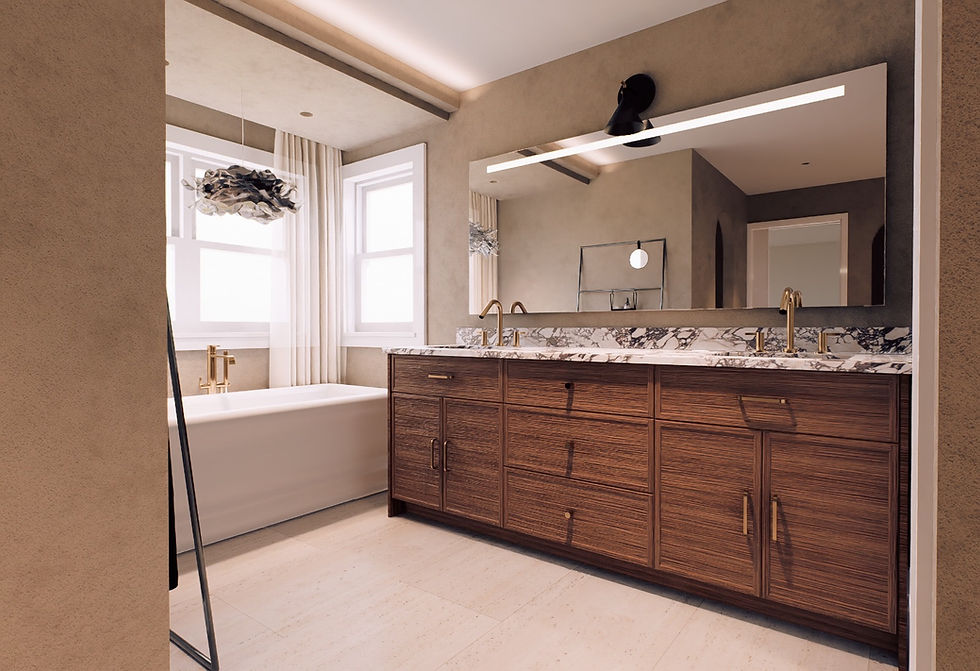
A double vanity with a tall linen tower. Each person gets their own space, and counters stay clear.
A warm wood vanity with soft neutral tile. It feels calm and inviting, and pairs well with brushed brass or matte black hardware.
Large format porcelain walls with one accent niche. A clean, modern look with fewer grout lines.
A curbless or low-threshold shower entry. A smooth transition from floor to shower that is easier to clean and friendly for the long term.
Layered, dimmable lighting. It makes the room feel like a spa at night and a bright, practical space in the morning.
You do not need all of these. Pick two or three that fit how you live, and let the rest go.

Plan It in 3D Before You Decide
Spend-and-save decisions are much easier when you can see them. At DAR Design and Remodeling, 3D design is how we help homeowners test layouts, tile, cabinets, and finishes before construction begins.
You can compare vanity styles, try different tile, or see what a larger shower would look like in your actual space. Changes are simple in design and much harder once construction starts. That makes it easier to put your budget where it matters and skip what does not.
Learn more about our 3D design services, or browse our bathroom projects for ideas.
Permits, Timing, and What to Expect
Permits are generally required when a project involves plumbing, electrical, or structural work. We know the local permit offices and HOA requirements in Highlands Ranch and the surrounding areas, so we can guide you through that part.
Many primary bathroom remodels take a few weeks. Projects with layout changes or custom materials can take longer. Timelines can also shift when we find unexpected conditions behind the walls, such as older plumbing or hidden moisture damage. If that happens, we tell you right away and walk you through the options so you stay in control of each decision.
For a closer look at pricing, read How Much Does a Bathroom Remodel Cost in Highlands Ranch? If you are thinking about long-term value, our guide on maximizing ROI on a bathroom remodel in Colorado can help.

Common Questions
Should I spend more on tile or on waterproofing?
Waterproofing first. Tile can be simple and still look great. Waterproofing protects everything else.
Is it worth moving the toilet or shower?
It depends. If the current layout causes daily frustration, it can be worth it. If the layout works, keeping it is a good way to control cost.
What should I never cut from the budget?
Waterproofing, ventilation, and quality plumbing parts. These are hard to fix once the walls are closed.
How do I decide what is worth upgrading?
Think about what you use every day. Upgrade those things first, and keep the rest simple.
Do I need a permit for a primary bathroom remodel?
Usually yes, if the work involves plumbing, electrical, or structural changes. Cosmetic updates often do not. We can confirm what applies to your project.
Ready to Plan Your Primary Bathroom?
You do not need to have every decision made. Whether you have clear ideas, a few inspiration photos, or just know the room needs an update, we can start with a real conversation about your home.
DAR Design and Remodeling offers a free in-home estimate, with no pressure and no obligation. We listen first, then help you decide where to spend, where to save, and what your bathroom could look like in 3D.
Or call or text us at 720-435-1823. We are available Monday to Friday, 8:00 AM to 6:00 PM, and weekends by appointment.


Comments